There’s a particular kind of disappointment that happens when you lean on a countertop expecting cool stone and get warm plastic instead. Nothing is technically wrong; the surface still works, still looks fine in photos, but something small breaks in that moment. A tiny gap opens up between what a material promised to be and what it actually is. Multiply that gap across an entire room, and you get a space that feels vaguely unconvincing without anyone quite being able to say why.
This is, at its core, what “material honesty” is actually about. It’s not a decorating trend or a buzzword picked up from an architecture lecture. It’s a fairly old design principle that’s become newly relevant now that printed laminates and synthetic finishes can imitate almost anything convincingly enough to fool a glance, if not a touch.
Where This Idea Actually Comes From
Material honesty isn’t a new concept dressed up for contemporary marketing; it traces back to modernist architecture in the early twentieth century, when figures like Mies van der Rohe and Louis Kahn argued that materials should be used according to their own nature rather than disguised as something else. Concrete should look like concrete. Steel should read as steel. The idea was partly aesthetic and partly ethical: dishonesty in materials, the thinking went, eventually produces dishonesty in the whole building.
That principle sat somewhat dormant for a few decades while faux finishes and printed surfaces became cheaper and more convincing. It’s resurfacing now, in interior design specifically, largely as a reaction to exactly that trend: a pushback against interiors built almost entirely from materials pretending to be something other than what they are.
What Material Honesty Actually Looks Like in Practice
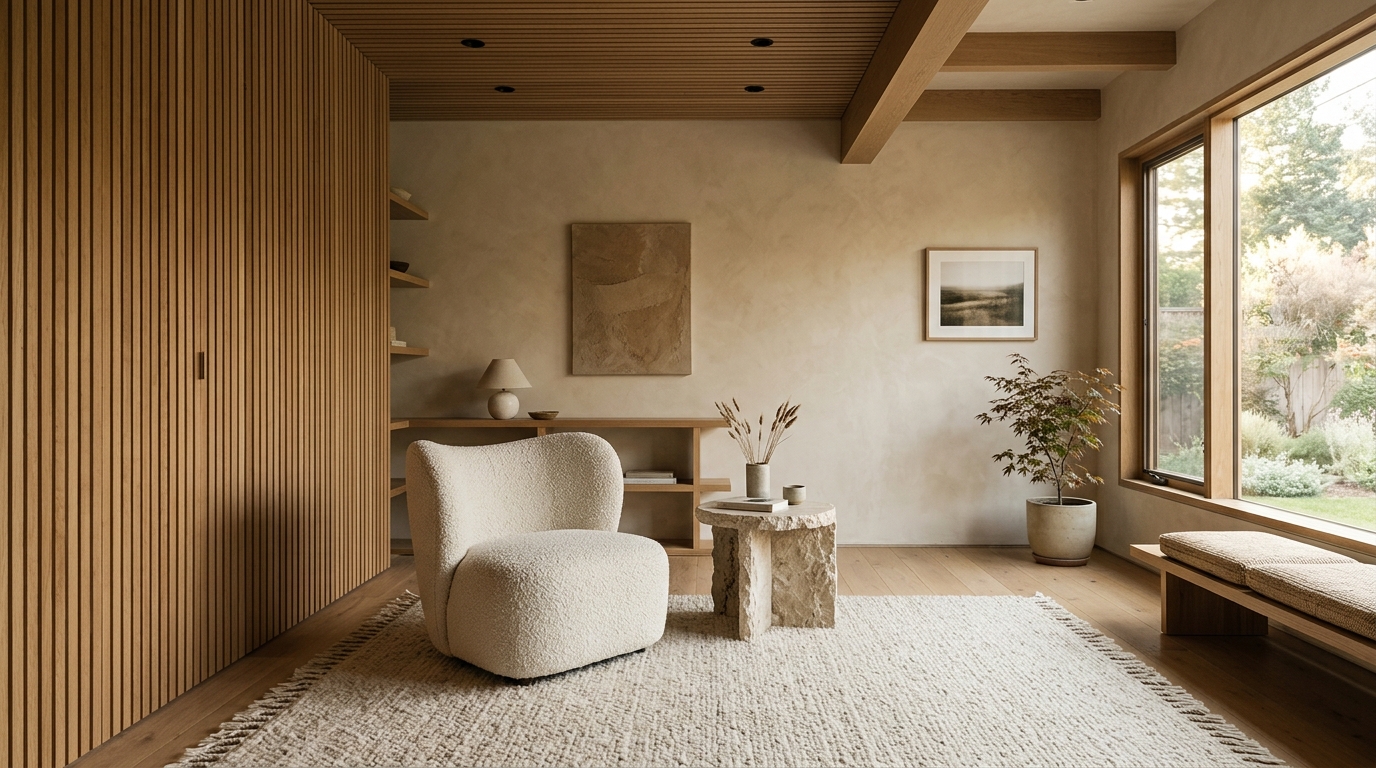
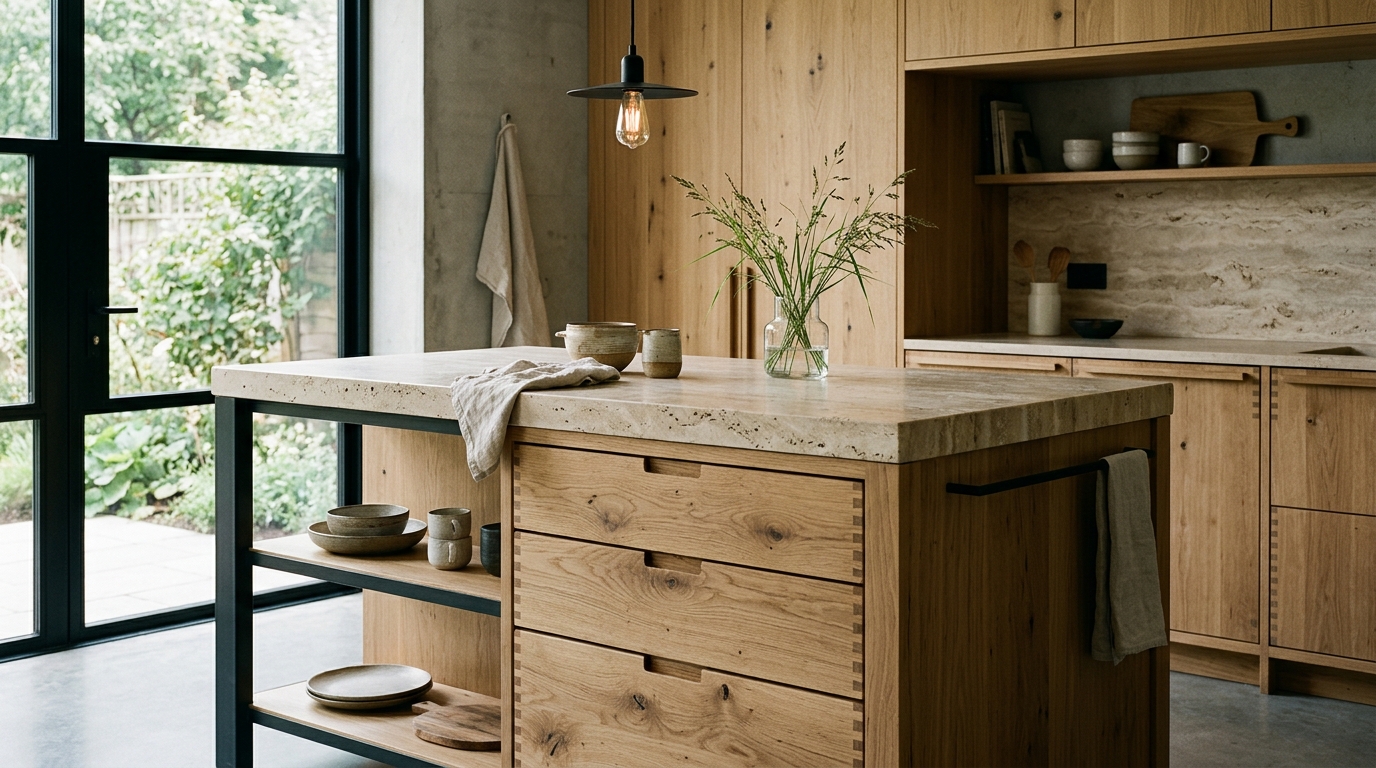
At the simplest level, it means letting materials show their real character instead of disguising them. Real wood left with a visible grain instead of coated until it looks like plastic. Concrete left slightly rough rather than polished into something resembling marble. Metal allowed to show its actual weight and cold touch rather than painted to mimic wood.
It’s worth being precise here, though, because material honesty doesn’t mean refusing engineered materials outright. That’s a common misreading of the principle. Plywood is an engineered product, and using it honestly doesn’t mean pretending it’s solid timber; it means using plywood as plywood, finished in a way that respects what it structurally is, rather than dressing it up to convincingly impersonate something it isn’t. A well-made veneered panel, where a genuine wood surface sits over a stable plywood core, is arguably more honest than a solid timber panel with a synthetic protective coating so thick it no longer feels like real wood at all.

Why This Distinction Matters More Than It Sounds
The reason this matters isn’t purely philosophical; it has real, practical consequences for how a space is experienced over time. Materials that pretend to be something else tend to fail at exactly the moment that pretence gets tested. A laminate trying to pass as timber looks fine until you scratch it and see the base material underneath, which never matched the surface story it was telling. A painted MDF surface mimicking wood grain looks convincing until moisture gets in at a seam and the illusion collapses at exactly the point of contact.
Honest materials, by contrast, tend to age in ways that still make sense. Real wood develops patina and wear that looks intentional rather than like failure. Exposed concrete picks up marks over years that read as character rather than damage. A material that’s allowed to be visibly itself has somewhere to go as it ages. A material disguised as something else usually just looks worse the moment the disguise slips.
The Sensory Argument, Not Just the Visual One
Most conversations about material honesty focus on how things look, but the more interesting argument is about how they feel—literally, under your hand. Vision can be fooled fairly easily by a well-executed printed finish. Touch is much harder to deceive. Real wood grain has texture a printed pattern doesn’t. Stone carries genuine temperature variation a synthetic surface won’t replicate. Woven textile has a give that a printed vinyl imitation never quite matches.
This sensory gap is precisely why dishonest materials tend to produce spaces that look right in photographs but feel slightly off in person, a mismatch a lot of people register without being able to articulate. It’s a large part of why “it looked better online” has become such a common complaint about furniture and interior products bought sight unseen.
Contemporary Design's Renewed Interest in This Idea
A lot of what’s driving material honesty back into current design conversations connects to sustainability concerns, even though the two ideas aren’t identical. Consumers increasingly want to know what a material actually is, not just what it looks like, partly because that knowledge connects directly to questions about durability, repairability, and environmental impact. A material that’s honestly presented is also a material that’s easier to evaluate honestly: you know what you’re buying, how it will age, and roughly what maintaining it will actually involve.
There’s also a simple fatigue factor at play. Interiors built entirely from convincing imitations of faux wood, faux stone, and faux everything have become common enough that genuine material presence now reads as distinctive rather than merely traditional. Real texture has become almost a luxury signal precisely because synthetic imitation has gotten so good and so widespread.
Where Plywood Fits Into an Honest Design Approach
It’s worth addressing directly, since it’s easy to assume material honesty is an argument exclusively for solid timber over engineered alternatives. It isn’t, and treating it that way misses the actual point of the principle.
Quality plywood used honestly, with visible edge grain left exposed in furniture design, or a genuine wood veneer that isn’t trying to disguise its layered structure, is a fully honest material choice. The dishonesty problem shows up specifically when a cheap core material gets buried under a thick synthetic coating designed purely to fool the eye into thinking it’s something entirely different. The material itself isn’t the issue. The intent behind how it’s finished and presented is.
This distinction matters practically for anyone specifying materials on a real project. Choosing plywood for cost, stability, or sustainability reasons, and finishing it in a way that respects what it structurally is, sits comfortably within material honesty as a principle. Choosing plywood and then disguising it so thoroughly that a client believes they’re getting solid timber they didn’t actually pay for is a different matter entirely.
What This Means for Anyone Choosing Materials
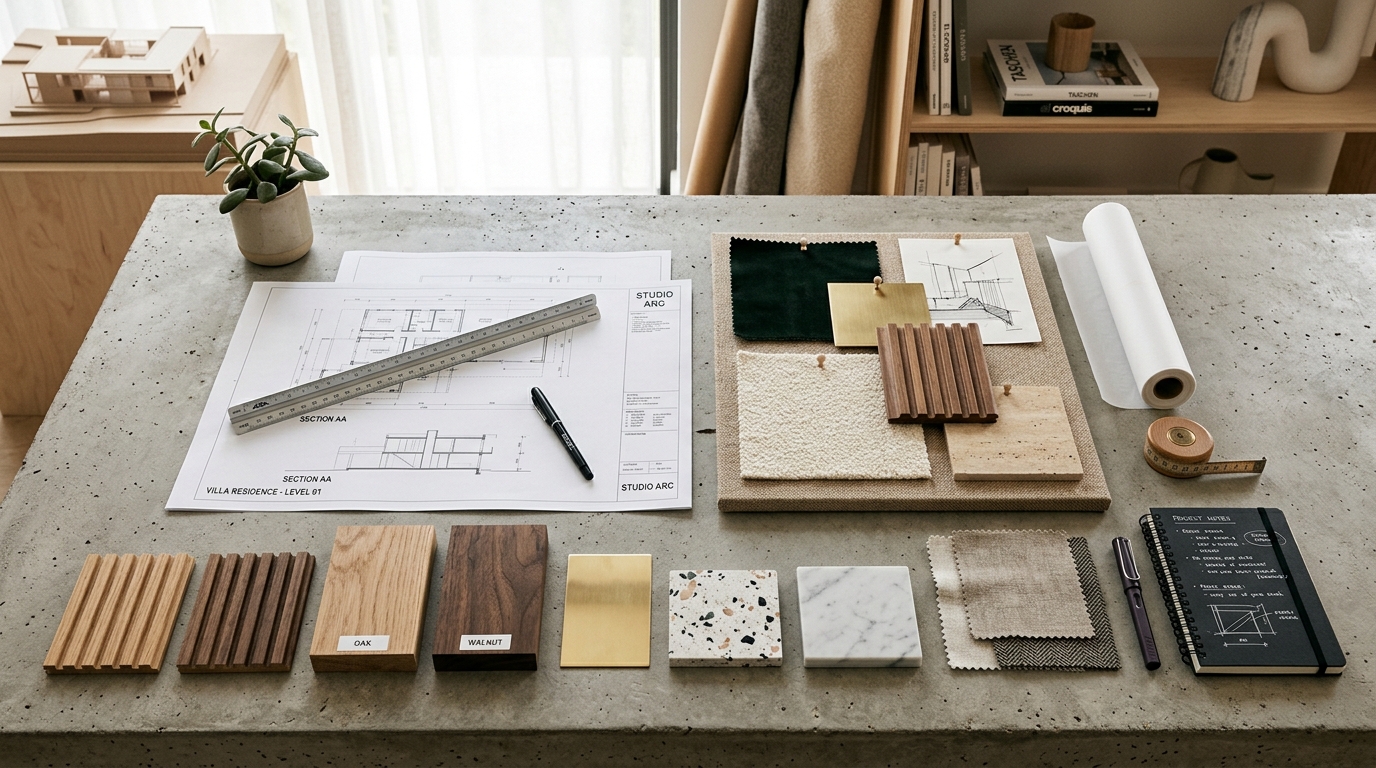
Material honesty, applied practically, comes down to a few genuinely useful questions worth asking before finalising a specification. Does this material’s finish reflect what it structurally is, or is it designed purely to disguise that? Will this surface age in a way that reads as character, or will it fail visibly the moment its top layer wears through? Does the tactile experience of this material match its visual promise, or will someone notice a gap the first time they actually touch it?
None of these questions demands exclusively natural materials or rejects engineered products outright. They simply ask for transparency about what a material actually is, finished in a way that respects rather than disguises that reality.
Conclusion
Material honesty isn’t really about choosing expensive materials over affordable ones or natural over engineered. It’s about the relationship between what a surface promises and what it actually delivers over years of contact rather than just the moment of first impression. A space built from honestly presented materials, whatever those materials happen to be, tends to age with more grace and feel more convincing to actually live in than one built from convincing imitations, however well those imitations photograph on day one.
In a design landscape crowded with synthetic surfaces engineered specifically to fool a glance, choosing materials that simply are what they claim to be has quietly become one of the more meaningful decisions a designer can make.