Design trends usually move in cycles, and ribbing is one of the foremost examples of that right now. It appeared on Art Deco furniture in the 1920s, disappeared for decades beneath the flat, glossy surfaces that dominated mid-century and later minimalist interiors, and has come roaring back in recent years—appearing on furniture, wall panels, ceilings, and even kitchen islands. The question worth asking isn’t really “why is this trending,” though. It’s “Why does this particular texture keep coming back, decade after decade, instead of fading out for good?”
The honest answer has less to do with fashion cycles and more to do with something fairly basic: ribbed surfaces do something to a space that flat ones structurally cannot. They’re not simply a stylistic choice from a mood board; they change how a surface reads under light, how a room feels at scale, and how materials age over time.
What "Ribbed" Actually Means in a Design Context
These are often confused, and that confusion is usually what turns a statement wall into visual clutter. Bold design is about making one clear decision and committing to it fully—through a deep colour, a strong texture, or a dramatic material. Busy means several competing decisions happening in the same space, none of which get to fully register because they’re all fighting for the same attention.
A single wall in a rich, saturated colour is bold. That same wall with a patterned wallpaper, a gallery of framed art, and an oversized light fixture layered on top is busy, even if every individual element is tasteful on its own. The test worth applying honestly: if you removed everything from that wall except the core material or colour decision, would it still feel intentional? If the answer is no, the wall is relying on accumulation rather than genuine design conviction.
Why This Texture Reads as "Contemporary" Right Now
Contemporary interiors have leaned hard into clean lines and minimal ornamentation for the better part of two decades. That’s produced a lot of genuinely elegant spaces, but it’s also produced a fair number of rooms that feel a bit sterile, more like a product showroom than somewhere people actually live or work.
Ribbed surfaces solve this without abandoning the minimalist foundation most contemporary design still relies on. A ribbed panel or piece of furniture keeps the restrained colour palette and simple silhouette that define the style while adding a layer of tactile interest that flat surfaces can’t provide. It’s texture without clutter, which is probably the single biggest reason it fits so naturally into spaces that would otherwise reject anything too ornamental.

The Optical Trick Ribbing Pulls Off
Here’s something that isn’t obvious until you’ve actually stood in front of a ribbed wall or piece of furniture: the repeated vertical or horizontal lines do genuine work on how a space is perceived, not just how it looks up close.
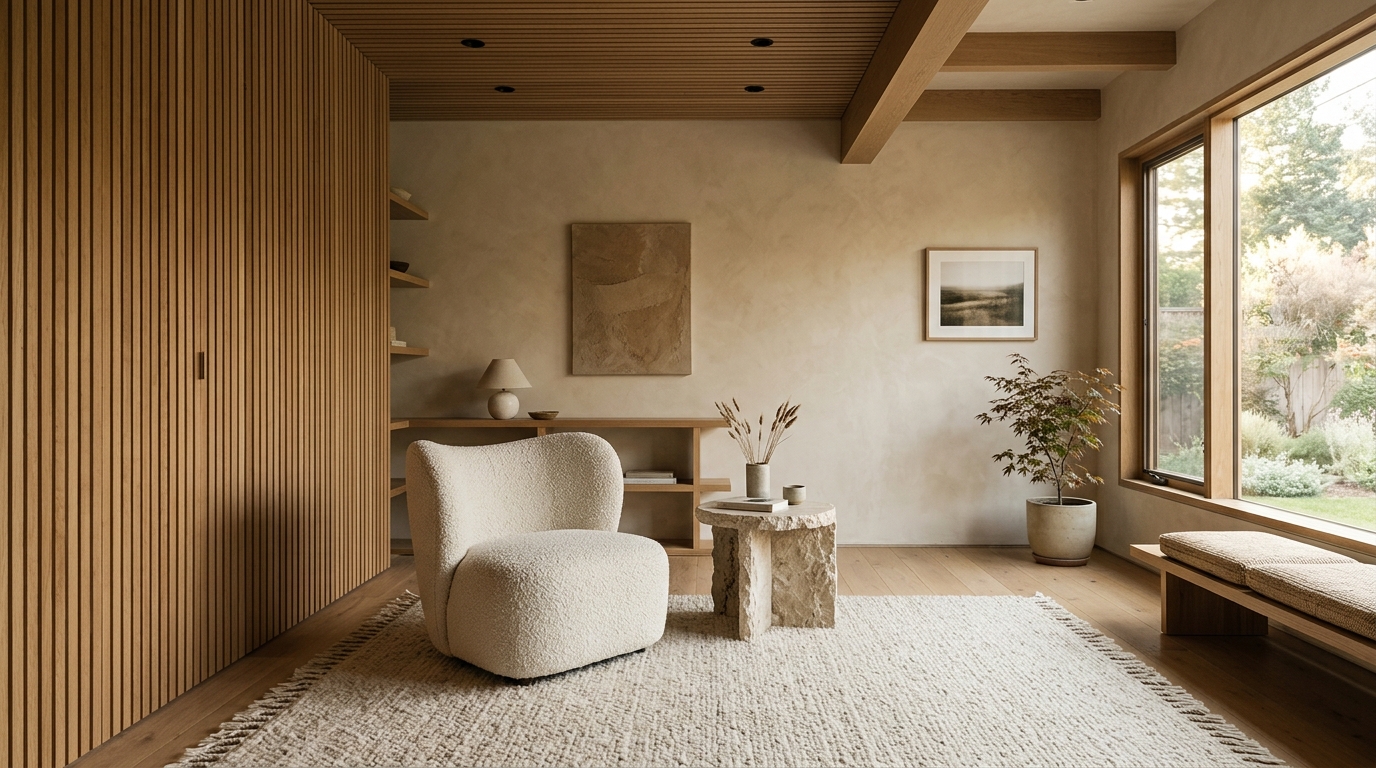
Vertical ribbing tends to draw the eye upward, which makes low ceilings feel a touch taller and narrow rooms feel less cramped. Horizontal ribbing does roughly the opposite; it can make a wall feel wider, which is useful in long, narrow rooms that need visual width rather than height. This isn’t a marketing claim; it’s basic visual perception, the same principle behind why vertical stripes are supposed to make people look taller in clothing. Applied to architecture and furniture, the effect is subtle but genuinely measurable.
There’s also the matter of shadow. Ribbed surfaces catch light unevenly by design, throwing soft shadows into each groove that shift as the light source moves through the day. A flat surface under the same light stays static and, frankly, a little dull by comparison. A ribbed one changes character from morning to evening, a kind of quiet visual movement that a plain wall or cabinet front simply doesn’t offer.
Where Ribbed Surfaces Show Up Best
Furniture is probably where ribbing has made the biggest comeback: sofas, headboards, and cabinet fronts with rounded ribbed detailing have become a defining look in contemporary furniture over the past several years, often paired with curved silhouettes rather than sharp angles.
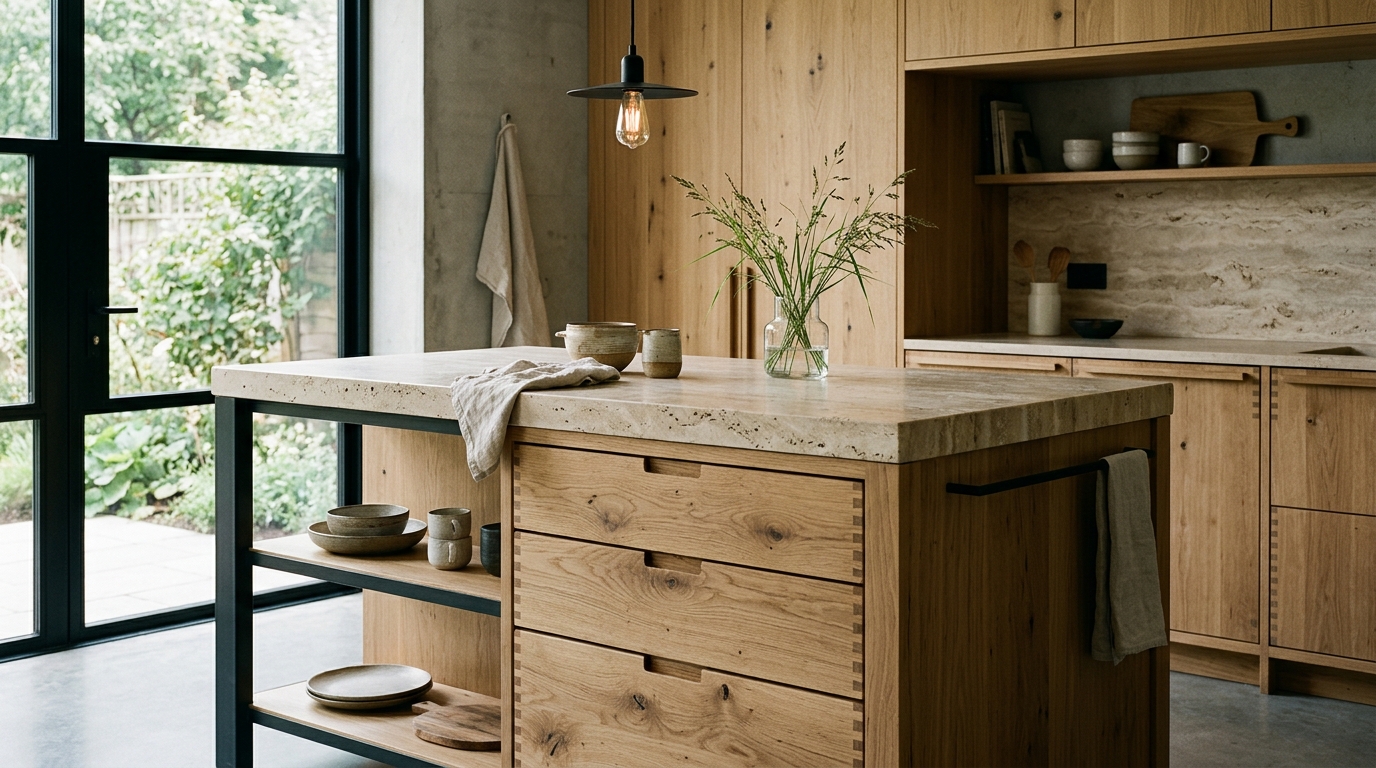
Kitchen islands and cabinetry are picking it up too, particularly in ribbed wood or engineered panel finishes that add warmth to what’s often the most utilitarian-looking part of a home. Wall panelling remains a strong application as well, especially as an accent behind a bed, sofa, or reception desk, where a large flat surface would otherwise dominate the room without offering much visual interest.
Even smaller design touches, ribbed glass partitions, ribbed ceramic tiles in bathrooms, ribbed metal fixtures on cabinet handles, borrow the same underlying principle at a much smaller scale, proving the idea works whether it’s covering an entire wall or a single drawer front.
The Practical Side: What Holds Ribbing Up Over Time
A ribbed surface is only as good as its ability to hold that shape without warping, chipping, or losing definition at the edges, and this is where the base material genuinely matters more than most buyers realise.
Solid wood can be carved into ribbed profiles, but it’s prone to expansion and contraction with humidity, which over time can soften sharp grooves or cause slight unevenness across a large panel. Engineered plywood handles this considerably better. Its layered construction resists warping in a way solid timber generally can’t match, which means ribbed detailing stays crisp and consistent even years after installation, rather than gradually blurring at the edges.
This matters even more on large-scale applications: a full wall of ribbed panelling, for instance, needs every groove to line up cleanly across multiple panels. A base material that shifts even slightly over time will throw that alignment off, and it becomes obvious the moment light hits the wall at an angle.
A Word on Overdoing It
Ribbing is a strong visual pattern, and strong patterns come with an obvious risk: using it everywhere in the same room can tip a space from “textured and considered” into “busy and repetitive” fairly quickly. The material generally works best as a feature rather than a wall-to-wall treatment: one ribbed accent wall, one ribbed furniture piece, rather than ribbing on every surface in sight.
Pairing it with flat, calm surfaces elsewhere in the room usually produces the best result. The contrast between textured and plain is what makes the ribbed element stand out in the first place; surround it with more texture, and that contrast disappears.
Conclusion
Ribbed surfaces have earned their place in contemporary design for reasons that go well beyond current taste. They manipulate how a room is perceived, they interact with light in a way flat surfaces structurally cannot, and, when built on the right base material — they hold their shape and definition for years rather than months. That combination of visual and functional benefit is a large part of why this particular texture keeps returning to design conversations decade after decade, rather than fading out like most passing trends eventually do.
Used with restraint and built on a stable material underneath, ribbed surfaces bring exactly the kind of quiet sophistication that contemporary interiors have been reaching for all along.